
You’ve bought a vehicle, and someone has recommended ceramic coating, paint protection film, or another protective treatment. Is it something you actually need or just another expense?
Additional paint protection is optional, but it can be worthwhile if you want easier maintenance, protection against particular types of damage, or a way to help preserve your vehicle’s finish.
Keeping the paint in good condition may also support resale value, although it does not guarantee a higher selling price or that you’ll recover the cost of the protection.
Your vehicle already has factory-applied protection. The question is whether adding to it makes sense for how you drive, park, and care for your car.
There is another consideration owners often overlook: the clear coat on your vehicle is a limited resource. Scratches can sometimes be polished out, but that process removes some of the surface. You cannot keep correcting the same paint indefinitely.
Doesn’t my vehicle’s new paint have any protection?
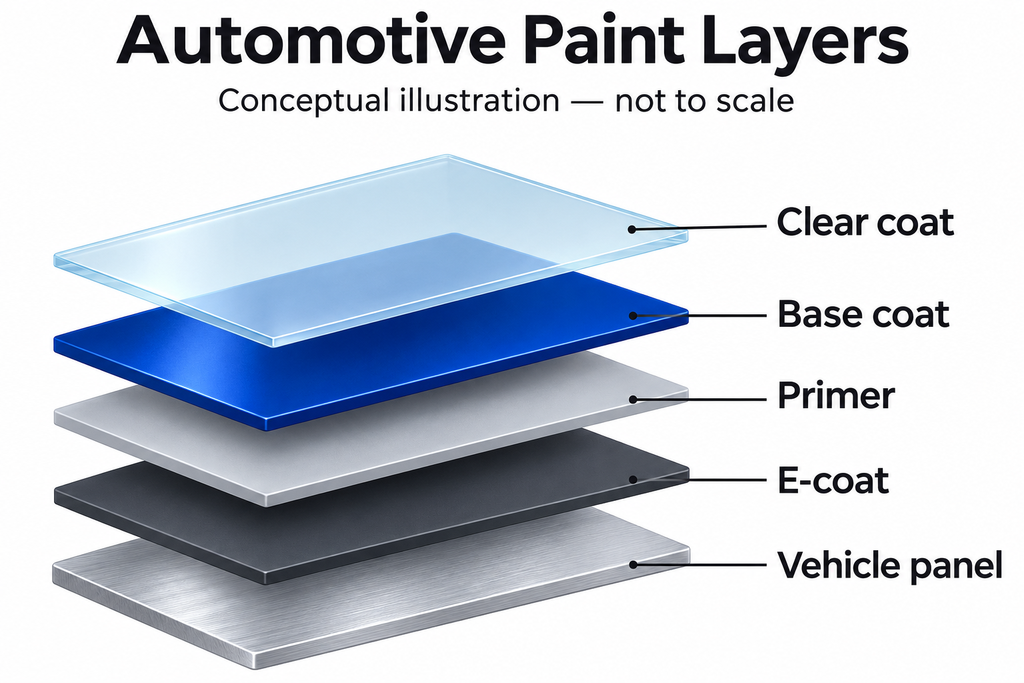
Yes. On a typical modern basecoat-and-clearcoat finish, the colour layer is covered by a transparent clear coat. That clear coat is the factory-applied outer protective layer, not simply a layer added for shine.
Along with providing gloss, it helps protect the colour beneath it from UV exposure, weathering and everyday environmental contaminants. UV protection is an important part of its role, although the finish can still deteriorate over time.
Clear coat offers resistance, not immunity
Clear coat provides chemical and stain resistance, but that resistance has limits. It varies with the paint formulation, the condition of the finish, the substance involved, temperature, and how long the substance remains on the surface.
Bird droppings, insect residue, and tree sap can leave staining or etching. Acidic contaminants and unsuitable cleaners can also damage the finish. Something that washes off promptly may cause a more persistent problem if it is left on the surface, particularly in hot conditions.
That is why a vehicle can have intact factory clear coat and still develop dull spots, stains, or etched marks. The clear coat is protecting the colour beneath it, but the clear coat itself is exposed to damage.
Use cleaning products intended for your vehicle’s finish and remove contaminants promptly using an appropriate method. Avoid dry-scrubbing stuck-on residue, which can introduce scratches.
Your vehicle’s new paint already has protection. That protection is valuable, but it is neither damage-proof nor unlimited. Understanding its limits helps explain why preserving the factory finish matters.
Modern automotive paint is thin and worth preserving
A glossy finish can look substantial, but its protective layers are remarkably thin.
Paint manufacturer PPG describes an approximate factory paint thickness of 90–120 microns. That figure refers to the paint system, not just the clear coat. One micron is one-thousandth of a millimetre.
The clear coat is only part of that total. BASF’s explanation of automotive paint layers, for example, describes a clear coat around 40 microns thick.
These are reference figures, not specifications for every vehicle. Thickness varies between paint systems and panels, and previous repairs or polishing can change what remains.
A vehicle can look glossy while having limited material available for future correction. That is why appearance alone cannot tell a detailer how aggressively the paint can be polished.
What role does robotic painting play?
Automotive factories use robotic painting systems to apply paint with precise control. Equipment manufacturer Dürr explains how automated painting processes manage layer thickness, including variations across curved body panels.
This technology helps manufacturers control the amount of paint applied to meet their chosen specifications. Robots do not inherently make paint thin or soft: the intended film thickness and the paint formulation are separate manufacturing decisions.
For owners, the important point is that a factory finish is not an unlimited reserve for future polishing. A new or expensive vehicle should not automatically be assumed to have generous clear-coat thickness.
Some modern vehicles have thin factory finishes, but an across-the-board claim that all newer vehicles have thinner paint than older ones would require comparative evidence. Assess the individual vehicle.
Is thin paint the same as soft paint?
No. Thickness describes how much material is present. Hardness describes a different property: how the cured finish responds to indentation and related surface damage.
In detailing, “soft paint” commonly describes a finish that marks easily during washing, wiping, or polishing. Thin paint is not automatically soft, and a harder finish is not automatically thick.
For the owner, these concerns lead to two useful questions: how easily does this finish develop marks, and how much can safely be done to improve them?
Why thin clear coat makes paint correction more challenging
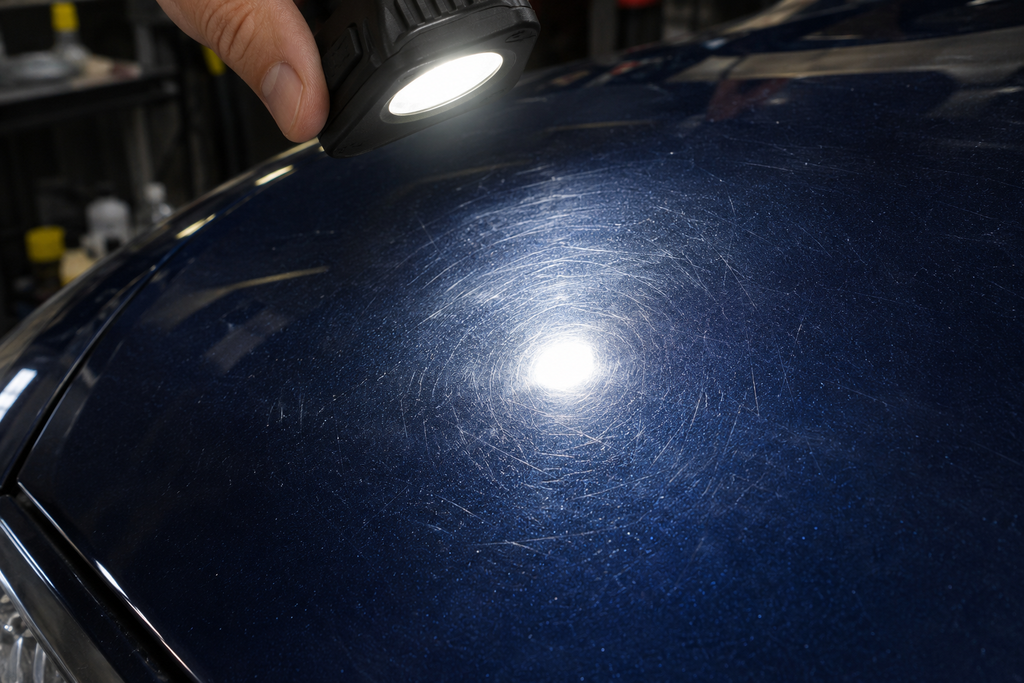
Paint correction uses abrasives to reduce the appearance of defects such as swirl marks and certain scratches. On a clear-coated vehicle, this usually involves removing a small amount of clear coat to level the affected surface.
Polishing improves the finish by removing material. It does not replenish clear coat.
A deeper scratch may require more removal than is appropriate. In that situation, reducing its visibility or leaving it alone may be a better choice than chasing complete removal.
Imagine an owner having the same panel aggressively corrected whenever wash marks return. Each correction uses more of the remaining finish. Eventually, further correction may carry too much risk.
That does not mean professional polishing is harmful by definition. It means correction should have a sensible stopping point.
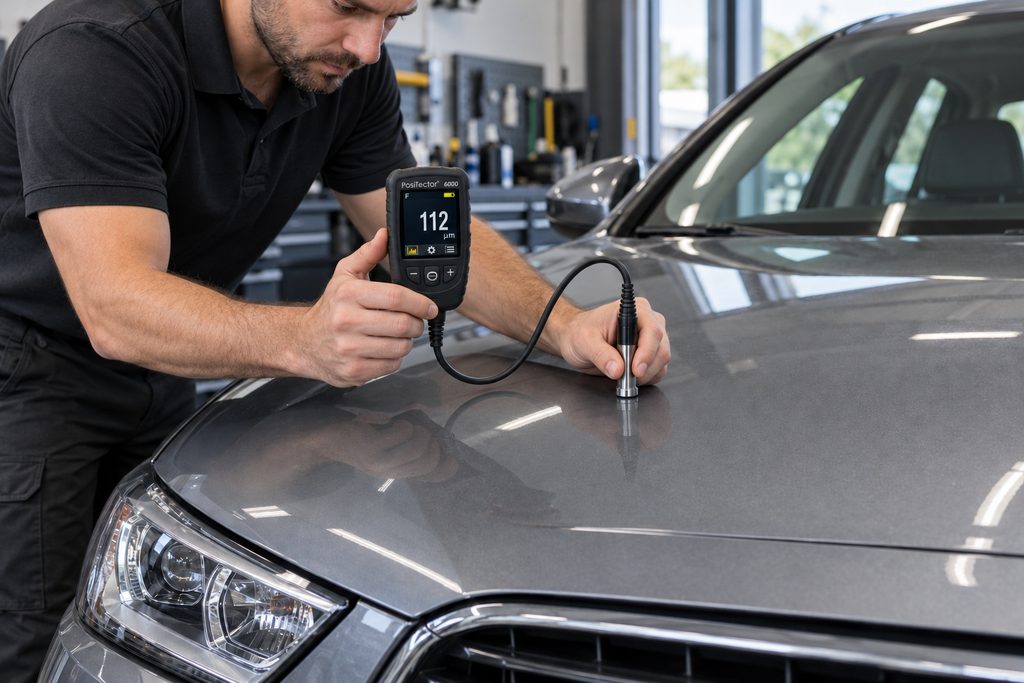
A responsible assessment considers paint condition, previous work, suitable thickness measurements, and a test area. Standard gauges used on metal panels generally measure total coating thickness; they do not isolate the clear coat. A reading is useful evidence, not a guarantee that a particular scratch can safely be removed.
The goal should be a well-preserved finish with an appropriate level of improvement.
Frequently asked questions
Is paint protection necessary on a new car?
Additional protection is optional. A new vehicle already has factory-applied paint and clear coat, but those layers are not immune to damage. Understanding the finish and your priorities is the starting point for deciding whether additional protection makes sense.
Does polishing remove clear coat?
Abrasive correction on a clear-coated finish removes some clear coat to improve surface defects. The amount depends on the paint, products, equipment, and technique.
How many times can a car be polished safely?
There is no universal number. Remaining material, previous correction, repainting, and the proposed process matter more than the number of polishing appointments.
Does thin paint always mean soft paint?
No. Thickness and hardness are different properties. A thin finish is not automatically soft, and a harder finish is not automatically thick.
Preserving your paint starts with understanding it
Additional paint protection is a personal choice, but the limitations of the existing finish deserve consideration. Clear coat is finite, and polishing cannot replace the material it removes.
For owners who want to maintain their vehicle’s appearance over time, that makes preservation worth thinking about before scratches accumulate. A sensible correction plan recognises when improving a defect is preferable to removing it completely.
Next week: What can additional paint protection actually do? We’ll explore coatings, paint protection film and self-healing technology, including their benefits, limitations and where each option fits.
Have questions about your vehicle’s finish? Contact Revivify Canada to discuss your concerns or connect with an applicator.


